A course with multiple learning tracks, designed to teach the application of anthropology in cyberspace

The Challenge
Bringing anthropology into cyber environments is a challenge to keep anthropology relevant and meaningful. Many learners with an interest in the subject want to have up-to-date skills and knowledge that applies to the current dominant means of cultural exchange.
The Solution
Serving as my own Subject Matter Expert, my research and experience led me to design this course. The primary course objective is to guide learners through the process of discovering how anthropological thinking can be brought to bear on problems in internet communications, artificial intelligence, human augmention and robotics. Using a cognitivist-constructionist approach, I created several learning modules, each focusing on a specific application of anthropology in cyberspace. This allows learners to thoroughly explore the midset and ideas of each problem-based scenario.
First Learning Module- Transhumanism
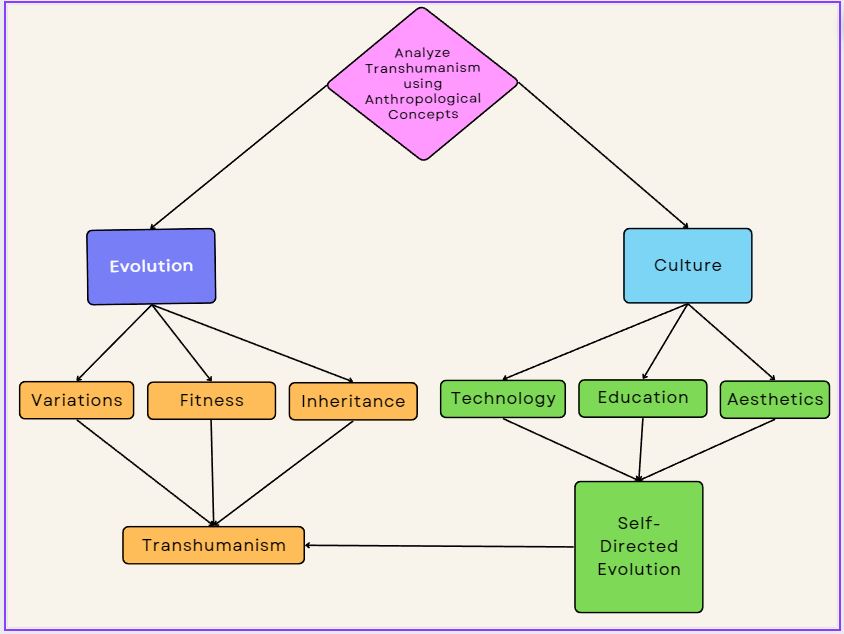
The first module developed was centered on applying anthropological thinking as a framework for understanding Transhumanism. Because Transhumanists advocate using technology as a tool for directing human evolution, I chose this as a fundamental topic for cyber-age anthropology, or Anthrocyberism. The setting is an imagined science fiction game or movie, with colorful module images that communicate a day-after-tomorrow setting.
Task & Skills Mapping
I mapped the course in Canva.
Learning Approaches in the Module
This module integrates Constructivist Learning Theory, encouraging learners to build their understanding of ethical issues in transhumanism based on their prior knowledge and new insights. Scenario-Based Learning is central, with interactive scenarios that engage learners in decision-making, reflecting on the consequences of their choices. Social Learning Theory is realized through character observations in scenarios, facilitating learning from contextual examples. Problem-Based Learning (PBL) is employed by presenting real-world ethical dilemmas for learners to solve, enhancing their practical application skills. Cognitive Learning Theory underpins the module’s design, engaging learners in critical thinking and problem-solving. Finally, Reflective Learning is promoted, encouraging learners to compare their initial thoughts with their gained knowledge, fostering deep understanding and personal growth.

Engaging the Inquisitive Mind
Learners keen on exploring the intersection of technology and ethics are guided on a journey of self-discovery through examination of the course material. The emphasis is on critical thinking and self-reflection, enabling learners to recognize and challenge their cultural biases and preconceptions. This learner-centric approach is enriched with insights gathered from surveys and assessments, tailoring the experience to the learner’s context and understanding.
The Transhumanism Ethics Module
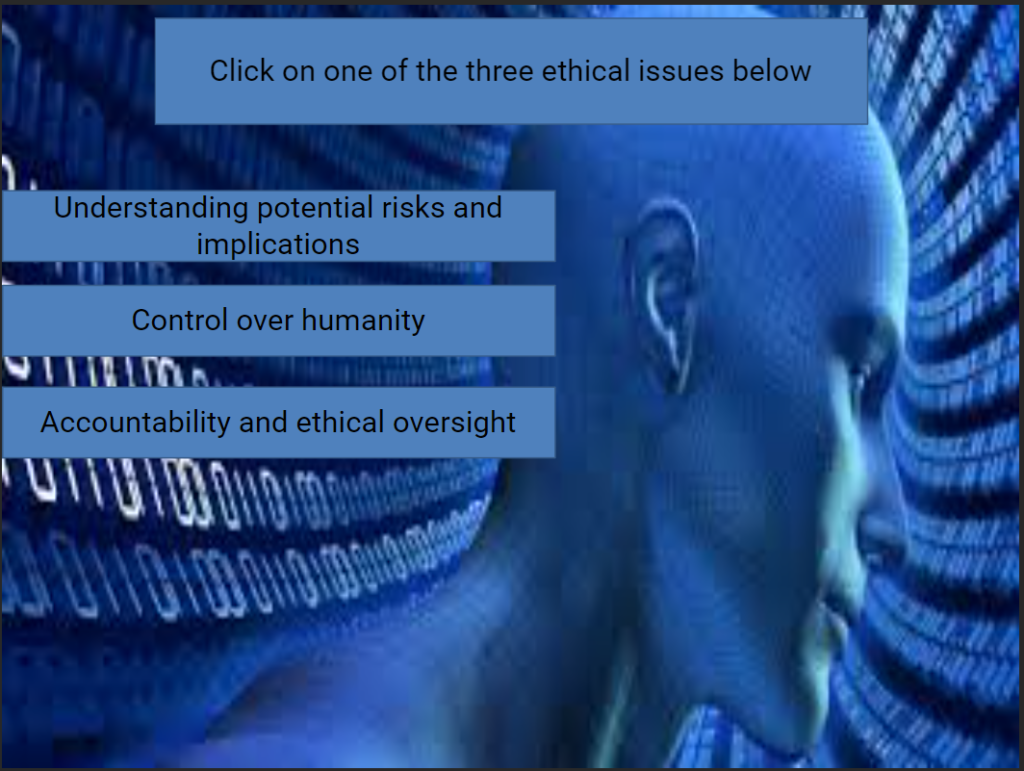
Scenario-based learning is employed to impart complex concepts related to transhumanism in an accessible and engaging manner. By placing learners in the shoes of decision-makers, it leverages Constructivist and Cognitivist Learning principles, enhancing ethical decision-making skills through practical, real-life situations. Each scenario and exercise is designed to provoke thought and encourage ethical analysis, promoting a deep and meaningful learning experience.